Agentic AI represents a shift in how legal technology works. Unlike basic chatbots or simple search tools, agentic AI systems can plan multi-step tasks, make decisions based on legal context, and execute complex workflows with minimal human intervention.
These tools don’t just generate text or answer questions.
They draft finish legal documents, analyze case law, negotiate contract terms, manage deadlines, and even forecast litigation outcomes. For law firms handling high document volumes or repetitive tasks, the technology can free up dozens of billable hours per week while reducing errors that come from manual review.
The tools in this category differ significantly in their focus areas. Some specialize in contract drafting and review, scanning agreements to flag risky clauses and suggest jurisdiction-specific language.
Others excel at litigation support, pulling relevant precedents from court databases and drafting motions that meet filing standards.
A few tackle practice management tasks like client intake, deadline tracking, or e-discovery document classification. Most combine with existing legal software through APIs or plugins, though setup complexity varies.
Security is table stakes: reputable vendors encrypt data, maintain SOC 2 compliance, and never train their models on your confidential client files.
Pricing ranges from under $100 per user monthly for focused tools to enterprise agreements in the thousands for firms needing custom agent configurations.
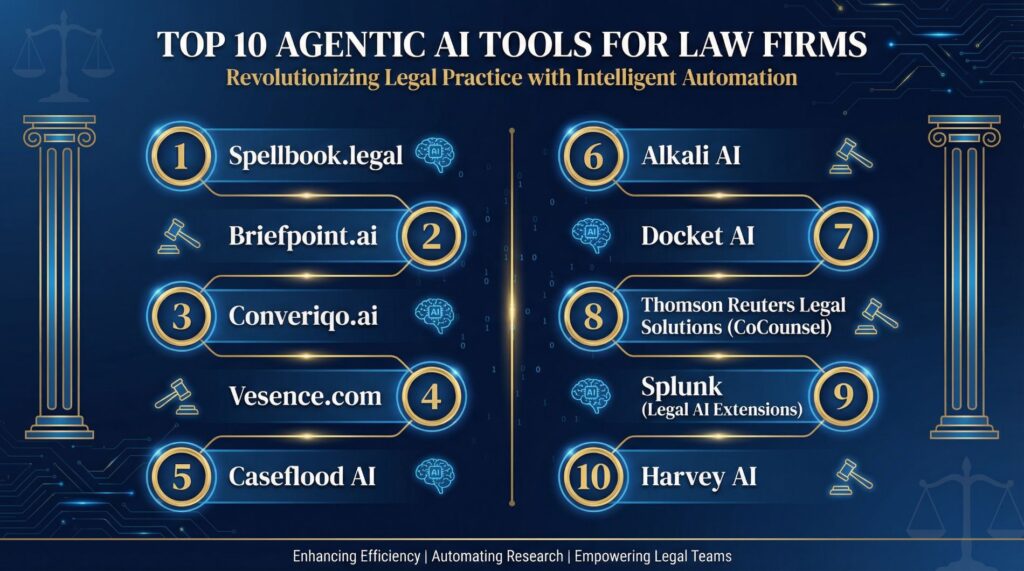
1. Spellbook.legal
Spellbook has become a go-to tool for transactional lawyers who spend significant time drafting and reviewing contracts. The platform uses AI trained specifically on legal agreements to understand clause nuance, jurisdiction requirements, and common negotiation points.
You can start with a basic template or even bullet points describing deal terms, and Spellbook generates a finish first draft with suitable legal language.
The tool highlights potential issues like missing indemnification clauses or vague termination language, and it can suggest choice phrasing when you’re negotiating terms with opposing counsel.
The system combines directly into Microsoft Word, so you don’t need to switch between applications. Firms using Spellbook report faster deal closings because the initial drafting happens in hours as opposed to days, leaving more time for strategic review and client consultation.
2. Briefpoint.ai
Litigation attorneys dealing with repetitive motion practice find value in Briefpoint. This tool automates the creation of discovery responses, routine motions, and standard briefs by analyzing your case files and pulling relevant legal authority.
You upload case documents and describe what you need. Briefpoint drafts a finish filing with proper citations to statutes and case law.
The platform includes legal reasoning in its outputs, not just boilerplate language, so the arguments hold up under scrutiny.
Setup requires connecting to your document management system, which typically takes less than an hour. California litigation firms have reported high approval rates on first drafts, though human review stays essential before filing.
The tool works particularly well for high-volume practices handling similar case types repeatedly.
3. Converiqo.ai
Client intake consumes substantial time for practices that handle many person cases, like personal injury or family law. Converiqo addresses this with AI agents that interact with potential clients through chat interfaces, gathering initial information, collecting documents, and qualifying leads before they ever reach an attorney.
The system asks relevant questions based on practice area, follows up on incomplete information, and flags cases that meet your firm’s criteria for acceptance.
Integration with calendar systems allows the AI to schedule consultations autonomously. Firms using Converiqo report significantly higher conversion rates on initial inquiries because prospects receive immediate engagement as opposed to waiting days for a call back.
The dashboard provides case viability scores based on the information gathered, helping you prioritize which matters deserve immediate attention.
4. Vesence.com
Compliance work and due diligence reviews involve checking agreements and policies against constantly changing regulations. Vesence builds custom AI workflows that watch regulatory changes, audit your existing contracts for compliance gaps, and generate reports detailing what needs updating.
The system learns from each audit you complete, improving its ability to flag issues specific to your clients’ industries.
You connect Vesence to your document repositories like SharePoint or Google Drive, and it runs scheduled scans without manual intervention. Corporate and transactional teams report saving roughly 20 hours per deal in compliance review time.
The tool particularly shines for firms with clients in heavily regulated sectors like healthcare, finance, or data privacy.
5. Caseflood AI
Managing many litigation matters simultaneously creates organizational challenges around deadlines, document preparation, and trial readiness. Caseflood approaches case management with AI agents that prioritize tasks across your docket, forecast likely trial outcomes based on similar case statistics, and prepare trial materials.
The platform enables collaboration by automatically assigning work to team members based on their availability and expertise.
You input court filings and case notes, and Caseflood generates simulated arguments to test different legal theories. Litigators using the system note faster preparation times, particularly valuable when handling last-minute motions or responding to unexpected filings from opposing counsel.
6. Alkali AI
E-discovery costs can quickly spiral when cases involve terabytes of emails, documents, and electronic records. Alkali tackles this problem with AI agents that classify documents, extract key facts, identify privileged materials, and build chronological timelines from massive document sets.
The system applies legal reasoning to flag potentially relevant evidence while filtering out clearly unrelated materials.
You upload electronic stored information, set your search parameters, and let the agents work overnight. Firms report cost reductions around 70% compared to traditional manual review or basic keyword searching.
The tool’s ability to recognize attorney-client privilege automatically helps avoid inadvertent disclosures that could waive protection.
7. Docket AI
Missing deadlines represents one of the most serious risks in legal practice, potentially leading to malpractice claims and sanctions. Docket AI watches court calendars, tracks filing requirements, and alerts you to upcoming deadlines across all your cases.
The system goes beyond simple reminders by drafting responses to opponent filings and flagging potential calendar conflicts when many matters have competing demands.
Integration with electronic court filing systems means the tool stays current with actual docket entries as opposed to relying on manual calendar updates. Solo practitioners and small firms particularly value this safeguard against the missed deadlines that can occur when juggling many cases with limited support staff.
8. Thomson Reuters Legal Solutions (CoCounsel)
Thomson Reuters leverages its extensive legal database through CoCounsel, an agentic AI platform for legal research and document analysis. The system can review deposition transcripts, draft legal memoranda, compare contracts across many deals, and analyze case law to identify relevant precedents.
Because it’s backed by Westlaw’s comprehensive legal content, the tool provides authoritative citations as opposed to hallucinated references.
You interact with CoCounsel using natural language queries, asking questions as you would to a junior associate. Large law firms favor the platform for its reliability and the depth of its underlying legal knowledge.
The tool combines with existing Westlaw subscriptions, making adoption straightforward for firms already in the Thomson Reuters ecosystem.
9. Splunk (Legal AI Extensions)
While Splunk built its reputation in cybersecurity and data analytics, its AI platform extends to legal operations for enterprise law departments and large firms. The system watches data logs to detect anomalies like unusual billing patterns, potential IP theft, or unauthorized access to confidential files.
AI agents can automate compliance audits by tracking who accessed sensitive documents and when.
This tool targets the operational side of legal practice as opposed to substantive legal work. AmLaw 100 firms and corporate legal departments use Splunk to maintain oversight of their technology infrastructure and ensure client data stays secure.
Setup requires more technical expertise than practice-focused tools, but the visibility it provides into firm operations can prevent costly security breaches.
10. Harvey AI
Harvey has emerged as a comprehensive agentic AI platform that handles many aspects of legal work. The system can develop case strategies, conduct legal research, draft various document types, and even assist with settlement negotiations by analyzing likely outcomes.
Unlike narrower tools, Harvey aims to function as a true AI associate that learns your firm’s writing style, preferred precedents, and strategic approaches.
The platform requires training on your historical cases and documents, which creates personalized outputs that match your firm’s voice. Technology companies and venture capital firms have adopted Harvey quickly, drawn by its ability to handle diverse legal tasks without switching between many specialized tools.
The comprehensive approach comes at a higher price point than single-purpose tools, but firms treating it as a junior associate replacement find the economics favorable.
Making Your Choice
Selecting the right agentic AI tool depends on your practice area and workflow pain points. Transactional practices dealing with contract volume should start with Spellbook or Vesence.
Litigators handling repetitive motion work gain the most from Briefpoint or Harvey.
High-volume consumer practices see immediate returns from Converiqo’s intake automation.
Most of these tools offer trial periods ranging from 14 to 30 days, letting you test them on real work before committing. The integration process has become simpler as vendors recognize that law firms often use legacy systems.
Many platforms now offer pre-built connectors for popular legal software like Clio, PracticePanther, and NetDocuments.
Setup typically takes between 30 minutes and a few hours depending on how much customization you want.
Security concerns are valid given the sensitive nature of legal work. All the platforms listed here encrypt data both in transit and at rest, maintain SOC 2 certification, and provide detailed audit logs showing who accessed what information.
Most importantly, reputable vendors contractually guarantee they will not use your client data to train their general AI models.
Some firms conduct their own security audits before adoption, particularly when handling matters involving classified information or trade secrets.
The tools deliver measurable returns fairly quickly. Firms tracking their metrics report reducing document review time by 60-80%, cutting deal closing timelines by weeks, and increasing billable hours because attorneys spend less time on administrative tasks.
One consistent theme across successful implementations: the technology works best when you view it as augmenting attorney judgment as opposed to replacing it.
The AI handles routine drafting, research, and document classification, freeing lawyers to focus on strategy, client relationships, and the complex judgment calls that define legal expertise.
If you’re unsure where to start, consider your biggest time sink. If you’re drowning in contract redlines, try Spellbook.
If discovery costs are eating your budget, test Alkali.
If you’re missing potential clients because intake takes too long, give Converiqo a trial run. Most firms end up using many tools as they uncover which aspects of their practice benefit most from automation.
Frequently Asked Questions
What makes agentic AI different from regular legal AI tools?
Agentic AI systems plan and execute multi-step tasks autonomously as opposed to just responding to person prompts. When you ask a regular AI chatbot to draft a motion, you might get generic text that requires substantial editing.
An agentic system analyzes your case files, researches relevant precedents, applies jurisdictional rules, drafts the motion, and flags potential weaknesses in the argument.
The distinction matters because agentic tools need less hand-holding and produce work closer to what a trained legal professional would create.
How do these tools handle data security and client confidentiality?
Reputable legal AI vendors apply bank-level security measures including AES-256 encryption, SOC 2 Type II compliance, and role-based access controls. They store data in isolated environments and maintain detailed audit trails.
Critically, responsible vendors contractually commit to never training their AI models on your confidential client data.
Before adopting any tool, review its security documentation and consider having your IT team or a third-party security firm audit the platform, especially if you handle matters involving sensitive information.
Can small firms and solo practitioners afford these tools?
Pricing has become more accessible as the market has matured. Several platforms offer plans starting around $50 per user monthly, which pencils out quickly if the tool saves even a few billable hours per month. Many vendors provide tiered pricing, so you can start with basic features and upgrade as your needs grow.
The bigger barrier often isn’t cost but rather the learning curve and workflow changes required. That said, solo practitioners avoiding malpractice claims through better deadline management or winning more clients through faster response times often see returns that dwarf the subscription cost.
Will these AI tools replace lawyers?
The current generation of legal AI augments as opposed to replaces attorney judgment. These systems excel at routine tasks like first-draft document generation, legal research, deadline tracking, and document classification.
They struggle with novel legal theories, complex strategic decisions, and the client relationship management that defines successful legal practice.
Firms using AI effectively report that junior attorneys spend less time on repetitive work and more time developing skills in client communication, negotiation, and strategic thinking. The technology shifts what lawyers do, not whether clients need lawyers.
How long does it take to see results after implementing these tools?
The timeline varies by tool and how you deploy it. Simple applications like deadline tracking with Docket AI or client intake with Converiqo can show results within days.
More complex implementations like training Harvey AI on your firm’s historical work product or integrating Alkali into your e-discovery workflow might take several weeks before you see full benefits.
Most firms report that the initial setup takes between a few days and two weeks, with productivity gains becoming obvious within the first month of regular use.
Do these tools work with existing legal software?
Integration capability has improved significantly as vendors recognize that law firms won’t abandon established practice management systems. Most tools now offer APIs or pre-built connectors for popular platforms like Clio, PracticePanther, Westlaw, Lexis, Microsoft 365, and Google Workspace.
Some operate as plugins that work directly within applications you already use, like Spellbook’s Microsoft Word integration.
Before committing to a tool, verify that it combines with your current technology stack, and ask the vendor for references from firms using similar systems.
What happens if the AI makes a mistake or cites fake cases?
Early legal AI tools suffered from “hallucinations” where they would invent plausible-sounding but entirely fictional case citations. The current generation largely solves this problem by grounding outputs in verified legal databases like Westlaw or Lexis.
Tools like Thomson Reuters CoCounsel only cite actual cases from their comprehensive database.
That said, no AI system is infallible, which is why every tool emphasizes human review before filing or sending any AI-generated work product. Think of these systems as highly capable first-draft generators as opposed to finished work.
The attorney stays responsible for verifying accuracy, applying judgment, and ensuring the final product meets professional standards.